A blender is a kitchen and lab tool used to mix, crush, purée, or blend food and other stuff. It usually has a container with a spinning blade at the bottom, powered by an electric motor in the base. Some strong blenders can crush ice and frozen foods. A newer type is the immersion blender, which has a motor on top connected to a blade that can be used in any container.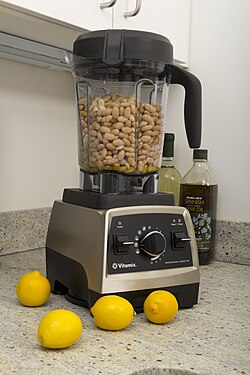
Blenders can do different things and have different features, but many, even the cheaper ones, are helpful for everyday use.
When people buy a blender, they look for things like:
– clear markings to measure ingredients
– easy to use
– quiet when running
– energy use (usually between 300 to 1000 watts)
– easy to clean
– a quick pulse setting for short bursts of blending
Most countertop blenders have containers that are 1 to 2 liters in size, made of glass, plastic, or stainless steel.
Glass blenders are heavier and more stable. Plastic can get scratched and pick up food smells. Stainless steel looks good but hides what’s inside.
Countertop blenders usually have 2 to 16 speed settings.
But more speed options don’t always mean the blender is better for everyone. If the blades can be removed, the container should have a seal between it and the base to stop leaks. The shape of the container helps food move around the blades instead of just spinning in place.
The base has the motor and controls.
Most modern blenders have several speed choices. Low-powered blenders need some liquid to work well. The liquid helps move solid ingredients around the jar, bringing them into contact with the blades. This creates a whirlpool effect that mixes things evenly. High-powered blenders can grind grains and crush ice without needing extra liquid.