WHY SHOULD WE VISIT THE 60 DOMES MOSQUE ?
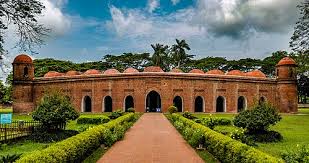
The Sixty Dome Mosque, known as Shait-Gumbuz Masjid in Bengali, is a historic mosque in Bagerhat, Khulna, Bangladesh. It is part of the Mosque City of Bagerhat, a UNESCO World Heritage Site. Built by Khan Jahan Ali, the governor of the Sundarbans, it is the largest mosque from the Bengal Sultanate period (1352–1576). It is one of the most impressive Muslim buildings in South Asia. The mosque is about 4.8 km from Bagerhat town and 320 km from Dhaka. Although called the Sixty Dome Mosque, it actually has 81 domes supported by 60 columns.
History
In the middle of the 15th century, a Muslim colony began to grow in the mangrove forests of the Sundarbans, near the coast in Bagerhat District.
A saint and general named Khan Jahan Ali established the colony.
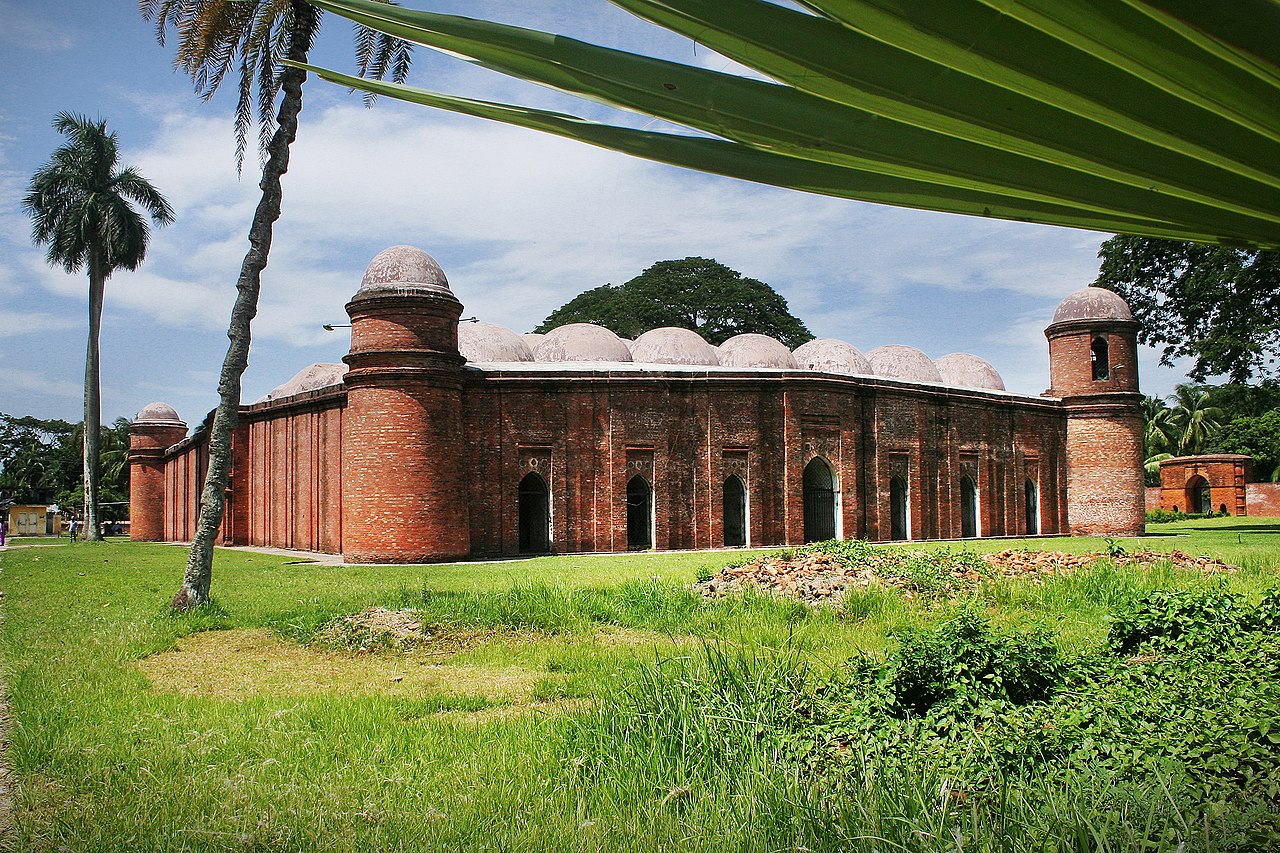
The Sixty Dome Mosque has thick, tapering brick walls in the Tughlaq style and, in addition, a later hut-like roof.
Furthermore, the mosque is long and narrow, measuring 45.26 × 30.89 meters outside and 37.57 × 23.22 meters inside.
Moreover, it has 77 small domes arranged in seven rows of eleven, along with one dome at each corner, making 81 domes in total.
In addition, there are four towers, two of which were used to call people to prayer.
Inside the mosque, thin stone columns divide the building into many aisles and sections. These columns, in turn, support arches that hold up the domes.
Today, we can see the ruins of these mosques around the most impressive and largest multi-domed mosque in Bangladesh, called the Shait-Gumbuz Masjid, which measures 49 meters in length and 33 meters in width.
Construction workers started building the mosque in 1442 and finished it in 1459. People used the mosque for prayers, as a school, and as a gathering place.
Architecture
Sure — here is a shorter version with the same meaning:
The Sixty Dome Mosque has thick, tapering brick walls in the Tughlaq style and a later hut-like roof.
Option 6 — With “nevertheless”
Eleven mihrabs decorate the inside of the western wall; nevertheless, while ten of them were made blind by the builders, the central mihrab remains visible from the outside.
Option 7 — With “in contrast”
Eleven mihrabs decorate the inside of the western wall; ten of them were made blind by the builders; in contrast, the central mihrab remains visible from the outside.
Option 8 — With “whereas”
Eleven mihrabs decorate the inside of the western wall; ten were made blind by the builders, whereas the central mihrab remains visible from the outside.
Option 9 — With “while”
Eleven mihrabs decorate the inside of the western wall; while ten were made blind by the builders, the central mihrab, however, remains visible from the outside.
Option 10 — With “unlike”
Eleven mihrabs decorate the inside of the western wall; unlike the other ten, which were made blind by the builders, the central mihrab remains visible from the outside.
Option 11 — With “by comparison”
Eleven mihrabs decorate the inside of the western wall; ten were made blind by the builders, while, by comparison, the central mihrab remains visible from the outside.
Option 12 — With “on the other hand”
Eleven mihrabs decorate the inside of the western wall; ten were made blind by the builders; on the other hand, the central mihrab remains visible from the outside.
Option 13 — With “in contrast to the others”
Eleven mihrabs decorate the inside of the western wall; in contrast to the other ten, which were made blind by the builders, the central mihrab remains visible from the outside.
Option 14 — With “whereas, by contrast”
Eleven mihrabs decorate the inside of the western wall; ten were made blind by the builders, whereas, by contrast, the central mihrab remains visible from the outside.
Option 15 — More elegant/academic
Eleven mihrabs adorn the interior of the western wall; while ten were deliberately constructed as blind niches, the central mihrab, by contrast, remains visible from the exterior.
The Use of Prayer Hall
The large prayer hall has 11 arched doorways on the east side and seven each on the north and south sides to provide ventilation and light. But the interior feels dark and serious. Sixty thin stone columns divide it into seven long aisles and 11 deep sections. These columns support rows of endless arches, which in turn support the domes. Each dome measures 1.8 meters in thickness, and the walls taper slightly. Round corner towers give the mosque the appearance of a fortress, and each tower has a small rounded top. This design resembles the Tughlaq style of architecture found in Delhi.
Option 1 — Natural and smooth:
Eleven mihrabs decorate the inside of the western wall; however, while builders made ten of them blind, the central mihrab, by contrast, remains visible from the outside.
Option 2 — More formal:
Eleven mihrabs decorate the inside of the western wall; of these, builders made ten blind, whereas the central mihrab instead remains visible from the outside.
3 — More descriptive:
Eleven mihrabs decorate the inside of the western wall; although ten were made blind by the builders, the central mihrab, in contrast, remains visible from the outside.
4 — Academic style:
Eleven mihrabs decorate the inside of the western wall; specifically, builders made ten of them blind, while, in contrast, the central mihrab remains visible from the outside.
5 — Best for historical/architectural writi
The mosque displays the wonderful archaeological beauty that characterized the 15th century.