Rice Cooker: A Convenient Kitchen Appliance
A rice cooker is one of the most useful and convenient kitchen appliances in modern households. As the name suggests, a rice cooker is mainly designed to cook rice automatically. However, modern rice cookers can do much more than simply preparing rice. Many advanced models can cook vegetables, meat, soup, porridge, pasta, steamed food, and even desserts. Because of their convenience, time-saving features, and easy operation, rice cookers have become popular in homes, restaurants, hostels, offices, and student accommodations around the world.
Rice is a staple food for millions of people, particularly in Asian countries such as Bangladesh, India, China, Japan, Thailand, and many other countries. Traditionally, cooking rice requires attention to the amount of water, heat, and cooking time. If the temperature is too high or the amount of water is incorrect, the rice can become too soft, too dry, or even burn at the bottom of the cooking pot. A rice cooker solves many of these problems by automatically controlling the cooking temperature and time.
What Is a Rice Cooker?
A rice cooker is an electric kitchen appliance that is specially designed to cook rice with minimum effort. A typical rice cooker consists of an outer body, an inner cooking pot, a heating element, a thermostat or temperature sensor, and a lid. Some models also include a measuring cup, rice paddle, steaming basket, and digital control panel.
The basic operation of a rice cooker is quite simple. First, the user measures the required amount of rice and washes it properly. The rice is then placed inside the cooking pot along with the correct amount of water. After placing the pot inside the cooker, the user closes the lid and selects the appropriate cooking function. The appliance heats the water and cooks the rice automatically. Once the rice is fully cooked, many rice cookers switch automatically to a “Keep Warm” mode.
How Does a Rice Cooker Work?
The working process of a rice cooker is based mainly on temperature control. When the cooker is turned on, the heating element begins to heat the cooking pot. The water inside the pot gradually becomes hot and eventually reaches boiling point. The rice absorbs the water as it cooks.
While water is present in the pot, the temperature generally remains around the boiling point. When most of the water has been absorbed or evaporated, the temperature inside the cooking pot begins to rise. The temperature sensor detects this change and signals the cooker to reduce or stop the heating process. Depending on the model, the cooker may then automatically switch to its “Keep Warm” function.
This automatic process means that users do not need to stand beside the stove and constantly monitor the rice. It makes cooking easier, especially for busy people.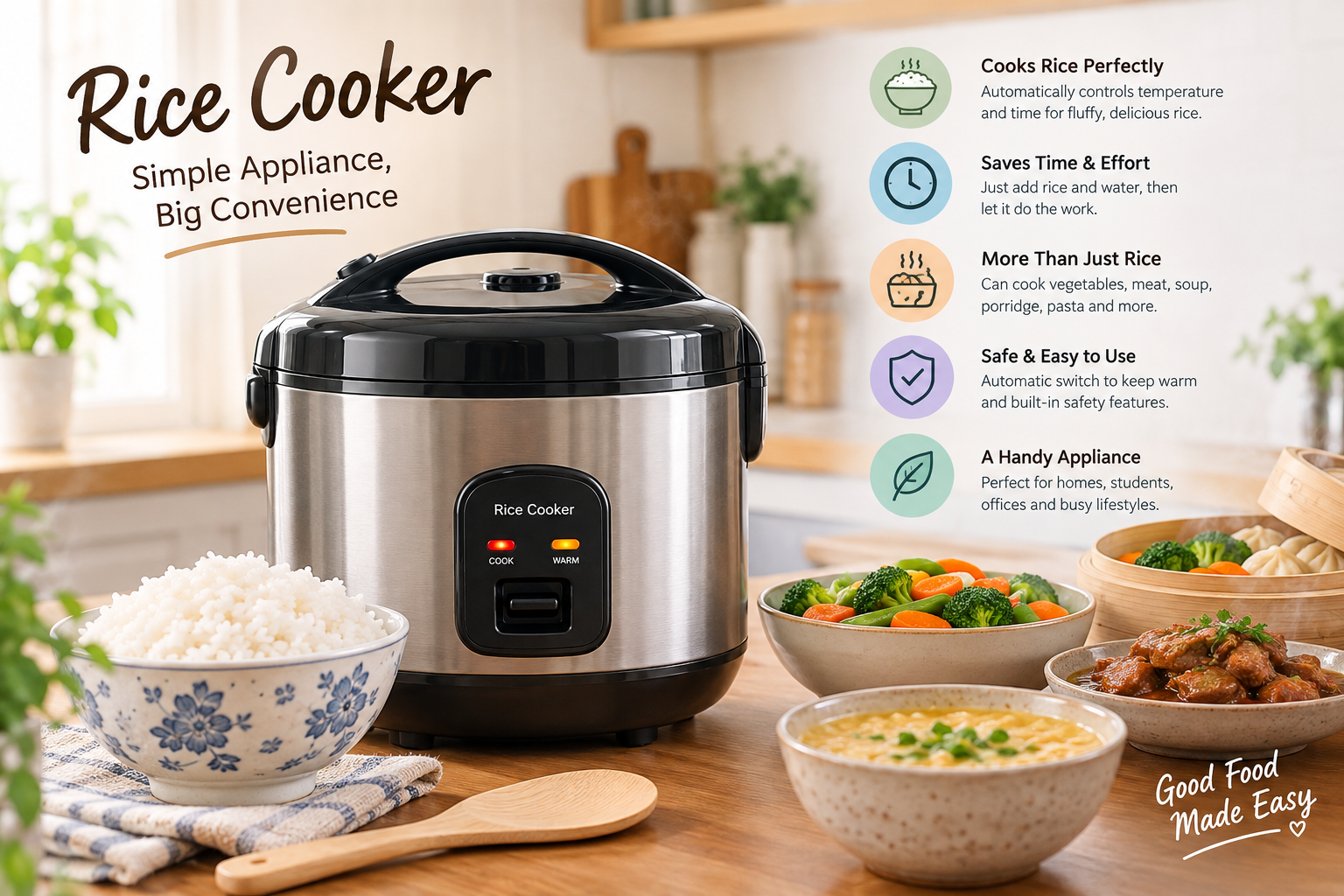
Benefits of Using a Rice Cooker
One of the biggest advantages of a rice cooker is convenience. Preparing rice in a traditional pot requires regular attention. In contrast, a rice cooker allows users to add rice and water, turn on the appliance, and continue with other activities.
Another important benefit is consistency. A good-quality rice cooker can produce evenly cooked rice when the correct amount of rice and water is used. This is particularly useful for people who find it difficult to cook rice perfectly on a traditional stove.
A rice cooker can also save time and effort. While the appliance is cooking, users can prepare other dishes, clean the kitchen, study, work, or simply relax. This makes rice cookers especially useful for students, working professionals, and large families.
Energy efficiency is another potential advantage. Because rice cookers are designed specifically for cooking rice, they can provide controlled heating and automatically reduce the temperature after cooking. However, actual energy consumption varies depending on the model, cooking quantity, and usage habits.
Different Types of Rice Cookers
There are several types of rice cookers available on the market. Basic rice cookers usually have simple controls, often with only cooking and warming functions. They are easy to operate and are generally suitable for people who mainly want to cook ordinary white rice.
Digital rice cookers offer more features and cooking programs. They may include settings for brown rice, quick cooking, porridge, steaming, and other dishes. Some advanced models use sensors and computerized controls to adjust cooking conditions automatically.
Another popular type is the multifunction rice cooker. These appliances can be used for several cooking purposes, making them useful for small kitchens. Some models can prepare rice, soup, steamed vegetables, meat, noodles, and other meals.
There are also pressure rice cookers that combine rice-cooking functions with pressure cooking technology. These models can reduce cooking time for certain foods and may provide different textures and cooking options.
Rice Cooker for Different Types of Rice
A rice cooker can be used to prepare different varieties of rice. White rice is usually the easiest to cook and requires relatively little preparation. Brown rice generally requires more water and a longer cooking time because it contains more of the outer grain layers.
Basmati rice and jasmine rice can also be prepared in many rice cookers. However, the appropriate water-to-rice ratio can vary depending on the type and brand of rice. Therefore, it is important to follow the instructions provided with the rice cooker and adjust the water according to personal preference.
Some advanced rice cookers have specific programs for different varieties of rice. These settings can make it easier to achieve the desired texture.
Cleaning and Maintenance
Proper cleaning is essential for keeping a rice cooker safe and functional. After every use, the inner cooking pot should be washed with a soft sponge and mild dishwashing liquid. The rice paddle and measuring cup should also be cleaned properly.
The lid and steam-release components should be cleaned according to the manufacturer’s instructions. Food particles and starch can sometimes accumulate around the lid or steam vent, so these areas should not be ignored.
The outer electrical body should never be immersed in water. Instead, it should be wiped with a slightly damp cloth and dried carefully. Regular maintenance can help extend the lifespan of the appliance.
Safety Tips
Although rice cookers are generally easy to use, users should follow basic safety precautions. The appliance should be placed on a stable, dry, and heat-resistant surface. The power cord should be kept away from water and excessive heat.
Users should also avoid overfilling the cooking pot because rice and other foods can expand during cooking. Overfilling may cause food or liquid to enter the steam vent.
It is also important to use the correct inner pot and accessories supplied or approved by the manufacturer. Damaged electrical cords or plugs should be replaced or repaired by a qualified professional.
Rice Cooker Beyond Cooking Rice
Modern rice cookers can be surprisingly versatile. They can be used to prepare a wide range of meals. For example, users can steam vegetables, prepare oatmeal or porridge, cook soup, make noodles, and sometimes even bake simple cakes.
For busy people, this versatility can be extremely helpful. A single appliance can perform several cooking tasks, which can reduce the need for multiple kitchen appliances.
A rice cooker can also be useful for meal preparation. People can cook a large amount of rice and use it for different meals throughout the day. This can save both time and effort.
Choosing the Right Rice Cooker
When buying a rice cooker, several factors should be considered. Capacity is one of the most important factors. A small cooker may be suitable for one or two people, while larger families may need a cooker with a bigger capacity.
The cooking functions are another important consideration. People who only need to cook white rice may prefer a simple and affordable model. Those who want to prepare different dishes may benefit from a multifunction or digital model.
The quality of the inner cooking pot should also be considered. A durable non-stick or high-quality inner pot can make cooking and cleaning easier. Users should also check whether replacement parts are available.
Price is another factor, but the cheapest option is not always the most suitable. It is better to consider the appliance’s durability, functions, capacity, warranty, and ease of cleaning before making a purchase.
Conclusion
A rice cooker is a practical and convenient appliance that can make everyday cooking much easier. It reduces the effort required to prepare rice, provides consistent results, and allows users to spend less time monitoring the cooking process. Modern rice cookers offer many additional functions, making them useful for preparing a variety of meals.
For students, working professionals, families, and anyone with a busy lifestyle, a rice cooker can be a valuable addition to the kitchen. With proper use, regular cleaning, and appropriate maintenance, a good rice cooker can provide convenient cooking for many years. As technology continues to improve, rice cookers are becoming more versatile and user-friendly, making them an increasingly useful appliance for modern kitchens.