Student-Led Protests Spark Political Upheaval
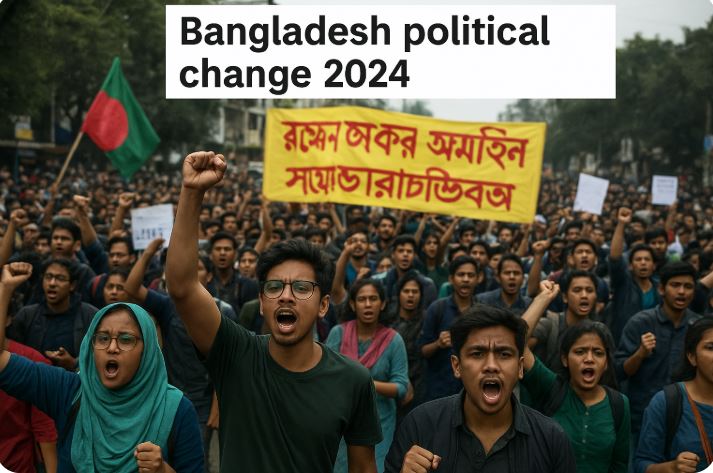
Bangladesh is experiencing one of its biggest political changes ever. The student-led protests in July 2024, sparked by issues related to civil service quotas, quickly grew into a large movement demanding justice, accountability, and the resignation of Prime Minister Sheikh Hasina. Under immense public pressure, Hasina resigned and left the country, ending over a decade of Awami League rule.
Interim Government and Reform Agenda
In her place, Muhammad Yunus now leads an interim government tasked with stabilizing the country, reforming institutions, and preparing for elections. This new administration focuses on restoring democracy and transparency, following the “July Charter,” a reform plan that highlights the judicial system, elections, and public administration.
Political Restructuring and Emergence of New Parties
A key development has been the ban on Awami League’s political activities and the suspension of its election registration. Authorities have cited the party’s role in violence during the protests. This change has notably shifted the political scene, allowing new political groups to emerge. Many new parties have already appeared, including youth-led organizations like the National Citizens Party, which connects to the protest movement. The Bangladesh Nationalist Party (BNP) remains active but now faces competition from these new players.
Upcoming Elections and Democratic Challenges
The interim government declared that national elections will take place in April 2026, after necessary reforms are made. Meanwhile, efforts will focus on ensuring a fair electoral process, updating voter lists, and strengthening the independence of the Election Commission.
Socioeconomic Pressures and Youth Expectations
Bangladesh faces significant challenges. Free and fair elections will only happen if all voices, including those from established parties like Awami League, are allowed to participate. At the same time, the youth, who played a key role in the movement, demand more than just symbolic changes. They want job opportunities, better governance, and an end to corruption. Meeting these expectations will be tough, especially with ongoing economic issues like inflation, unemployment, and vulnerability to global economic changes.
Future Scenarios and Risks
Looking ahead, several scenarios could emerge. If the reforms work and the elections are trustworthy, Bangladesh might move toward stable democratic progress. On the flip side, youth-led parties could significantly change the political landscape, possibly reducing the power of established groups. However, challenges remain: if the reforms fail or the elections are seen as illegitimate, the country could face renewed unrest or even drift toward authoritarianism under a new leader.
A Nation at a Crossroads
Bangladesh stands at a critical point. Hasina’s departure has opened the way for reform, but the real test is yet to come. The focus is on delivering fair elections, meeting public expectations, and ensuring stability. The choices made in the next 18 months will be crucial for determining whether Bangladesh can achieve lasting democracy or fall back into political turmoil.